You can start the course and guided table before signing in.
You are viewing this landing page in English (US)
Use an account when you want to save progress, continue on another device, and keep your path inside BJCPRO.
By continuing, you agree to the and the of BJCPRO..
Account
Manage your subscription in seconds.
👤
Your account
FREE
Unknown status Renewal date not available
No noise. Just essentials.
Actions
Upgrade, manage billing, or cancel anytime.
Upgrade when you’re ready
Unlock premium features with a fast upgrade.
PRO
More systems, strategy, and simulation
Save 25% annually
$9.99 USD/month
$7.49 USD/month*
Annual billing: $89.91 per year.
ELITE
The most complete version of BJCPRO
Save 20% annually
$12.99 USD/month
$10.39 USD/month*
Annual billing: $124.70 per year.
If a trial is available, it will be applied automatically when upgrading from FREE.
BJCPRO·Revere RAPC
Revere RAPC: extreme tag detail for players studying the outer edge of public systems
A high-detail balanced count from the Revere family—historically important, technically serious, and usually too much system for most players.
May 6, 2025·BJCPRO Editorial Team·16 min read
#Level 4#RevereRAPC#Blackjack
Revere RAPC belongs to the class of counts that serious blackjack students eventually encounter even if they never choose to play them full time. It is valuable because it teaches what “maximum detail” really costs.
Revere RAPC is a balanced, high-detail advanced system. It is best treated as a specialist study count or a deliberate choice by players who already know they can sustain very high mental load.
Who should use it, and who should not
Use this section as the fast decision layer before you dive into the count map and betting interpretation.
Difficulty: Very advanced.
Good fit: Players intentionally exploring the upper edge of public count detail.
Usually not ideal for: Nearly everyone before advanced mastery.
Prerequisites: Excellent execution, true-count fluency, and realistic tolerance for complexity.
History and origin
QFIT’s Revere Advanced references describe RAPC and related Revere counts as proprietary strategies developed in the early 1970s and sold by the Revere family. This is a Lawrence Revere lineage topic—not the modern fictional attributions that often appear in low-quality summaries.
Lineage: Lawrence Revere count family.
Development window: early 1970s in modern QFIT references.
Historical reality: respected, complex, and little used today.
Why it still matters: it shows how far public count detail can be pushed before operational cost dominates.
How the count works
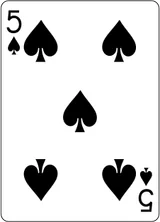
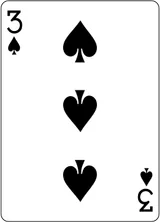
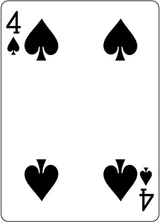
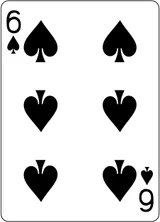
Revere RAPC uses +4 on 5, +3 on 3, 4, and 6, +2 on 2 and 7, 0 on 8, −1 on 9, −3 on 10-value cards, and −4 on Ace. It is balanced, but the sheer granularity means the practical question is almost always about execution cost rather than about abstract strength.
Card-value map
Card 5+4
Cards 3–4 and 6+3
Cards 2 and 7+2
Card 80
Card 9-1
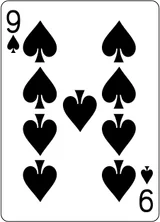
10-value cards-3
Ace-4
True Count = Running Count ÷ decks remaining.
Interactive widget
Adjust the count to see its effect
True Count: 6.00
Interactive widget
Illustrative example
Illustrative example
A large positive running count can produce attractive true counts quickly in RAPC, but the real challenge is keeping the tags error-free long enough for that theoretical edge to matter.
Betting interpretation
When it usually makes sense to raise
Increase cautiously on clear positives only.
Expand meaningfully when the count is strong, the shoe is deep, and you are still fully in control of the tag stream.
Avoid all-in-style aggression just because RAPC generates dramatic counts.
When to stay at table minimum
Stay at minimum whenever the game is merely average, whenever pace is high, or whenever your confidence in the count quality is less than excellent.
When to reduce exposure or change tables
Leave weak games and reduce exposure the moment the workload becomes a source of hesitation. With RAPC, execution errors destroy value fast.
Revere RAPC should not be learned as a vanity project. Its only real justification is that your practical execution remains strong enough to harvest the extra detail.
Best use cases
Best as an advanced study count or niche personal system.
Useful for understanding why simpler counts often dominate in real play despite slightly lower theoretical power.
Poor fit for crowded or distraction-heavy tables.
In BJCPRO, compare RAPC against Uston APC and Omega II to judge whether the extra detail is paying you back.
Pros, limits, and common mistakes
Pros
Very high information granularity.
Historically important in the Revere lineage.
Excellent study tool for advanced count comparison.
Limits
Extreme mental load.
Little practical upside for many players compared with simpler counts.
Easy to admire, hard to exploit.
Common mistakes and what to learn next
Learning RAPC before mastering counts you can actually deploy.
Chasing theoretical edge while giving away practical speed.
Assuming “more detail” automatically means higher real-world EV.
Best next system after RAPC: for most players, the smarter move is not “next harder,” but returning to the strongest count you execute cleanly.
Lawrence Revere. Playing Blackjack as a Business for broader historical lineage context.
Recommended path
Strategy first, comparison next, practice after that.
The goal is to understand what changes between systems before speeding up the table. Difficulty should rise only when your execution is stable.
BJCPRO
Practice this system in BJCPRO
No broken video embeds
BJCPRO makes RAPC useful even if you never adopt it full time: run it, compare it, and decide honestly whether the extra detail survives contact with real pace.