BJCPRO · blog.hiOptIArticle

Hi-Opt I: the clean ace-neutral upgrade from Hi-Lo

A level‑1 balanced count for players who want ace-neutral structure without the full complexity of Hi-Opt II.

Hi-Opt I is one of the most logical next steps after Hi-Lo. It stays operationally light, but it introduces the ace-neutral mindset that separates more technical systems from beginner counts.

Read the guidePractice Hi-Opt I

Quick answer and positioning

Hi-Opt I is a balanced, ace-neutral level‑1 system. It fits players who want more technical control than Hi-Lo while keeping a manageable tag structure.

Who should use it, and who should not

Use this section as the fast decision layer before you dive into the count map and betting interpretation.

  • Difficulty: Low-intermediate.
  • Good fit: Players moving from Hi-Lo into ace-neutral logic.
  • Usually not ideal for: Players who want the strongest possible betting efficiency without side counts.
  • Prerequisites: Comfortable true-count conversion and stable mental pace.

History and origin

Hi-Opt I was developed by Lance Humble and Carl Cooper, building on the earlier Einstein count associated with Charles Einstein. The modern published version is tied to The World’s Greatest Blackjack Book, with indexes created by Julian Braun.

  • Developers: Lance Humble and Carl Cooper.
  • Earlier lineage: Charles Einstein’s late-1960s work.
  • Key publication: The World’s Greatest Blackjack Book.
  • Historical role: One of the classic single-deck and double-deck transitional counts.

How the count works

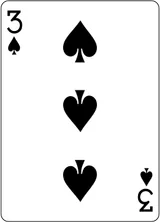
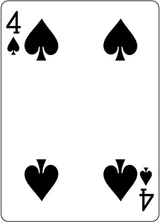
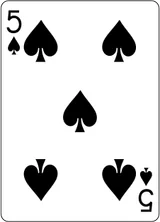
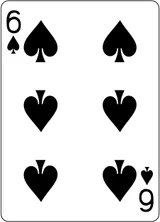
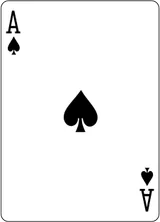
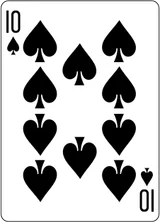
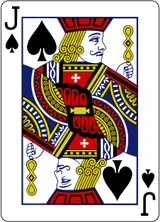
Hi-Opt I gives +1 to 3 through 6, 0 to 2, 7, 8, 9, and Ace, and −1 to 10-value cards. Because aces are neutral, the system gives a cleaner read on non-ace card composition—but that also means its raw betting efficiency is lower than players sometimes expect without additional ace information.

Card-value map
Cards 3–6+1
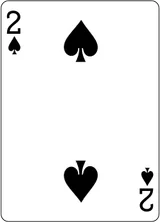
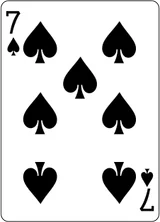
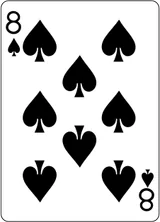
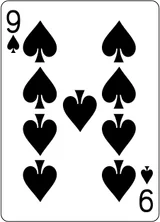
2, 7–9, and Aces0
10-value cards−1

True Count = Running Count ÷ decks remaining.

Interactive widget
Adjust the count to see its effect

True Count: 3.00

Interactive widget
Illustrative example

Illustrative example

Example: a running count of +5 with roughly 2.5 decks remaining gives a true count near +2. That is usually a reasonable first expansion point, but players should be careful not to overstate the edge at mild positives.

Betting interpretation

When it usually makes sense to raise

  • TC +1: often still a caution zone.
  • TC +2: practical point for the first real increase in many shoe games.
  • TC +3 and above: more attractive for wider spreads if rules and penetration justify it.

When to stay at table minimum

Stay at minimum when the count is flat or negative, and also when you know your mental speed is not yet strong enough to convert true count cleanly under pressure.

When to reduce exposure or change tables

Do not keep forcing action just because Hi-Opt I is “more advanced.” Leave weak shoes, shallow games, and crowded tables the same way you would with Hi-Lo.

Illustrative thresholds only. In ace-neutral systems, small positives can look cleaner than they really are. Rules, penetration, decks, bankroll, and index quality still decide whether the game is worth real aggression.

Best use cases

  • Excellent progression step after Hi-Lo.
  • Good for players who want ace-neutral thinking without a side count yet.
  • Useful in games where speed still matters and a heavy count would cost accuracy.
  • In BJCPRO, it is the clean bridge into Hi-Opt II and other more technical systems.

Pros, limits, and common mistakes

Pros

  • Ace-neutral structure teaches better composition thinking.
  • Light enough to stay practical.
  • Natural technical upgrade from Hi-Lo.

Limits

  • Less famous and less universally supported than Hi-Lo.
  • Without an ace side count it is not a betting monster.
  • Some players expect more power than the workload actually buys them.

Common mistakes and what to learn next

  • Believing ace-neutral automatically means stronger betting.
  • Ramping too hard on modest positives.
  • Skipping Hi-Lo discipline and trying to “graduate” too early.
  • Best next system after Hi-Opt I: Zen Count for a true level‑2 jump, or Hi-Opt II if you are ready for side-count discipline.
Verified resources

References

  • Lance Humble and Carl Cooper. The World’s Greatest Blackjack Book.
  • Norm Wattenberger, QFIT. Hi-Opt I – Card Counting Strategy.
  • Michael Dalton / Blackjack Review references on Einstein, Humble, and Braun lineage.
BJCPRO

Practice this system in BJCPRO

No broken video embeds

The best way to practice Hi-Opt I is not to read more theory but to run BJCPRO shoes until ace-neutral tagging feels automatic and the true-count conversion stops costing speed.

Practice Hi-Opt ICompare it with Zen Count