BJCPRO · blog.mentorCountArticle

Mentor Count: a disciplined level‑2 compromise between shoe strength and usability

Balanced, multi-level, and underused—useful for players who want more power than Hi-Lo without jumping to the hardest systems first.

Mentor Count is not a mainstream first system, but it deserves more respect than it gets. It gives skilled players a balanced level‑2 structure with a practical emphasis on real shoes rather than pure theoretical elegance.

Read the guidePractice Mentor Count

Quick answer and positioning

Mentor Count is a balanced, level‑2 system. It is best for players who already handle true count smoothly and want a stronger all-around count than the basic level‑1 family.

Who should use it, and who should not

Use this section as the fast decision layer before you dive into the count map and betting interpretation.

  • Difficulty: Intermediate to advanced.
  • Good fit: Players who want more power without committing immediately to fractional or level‑3 methods.
  • Usually not ideal for: Beginners or counters who still struggle with pace and conversion.
  • Prerequisites: True-count discipline, clean deck estimation, and consistent basic strategy deviations.

History and origin

Mentor Count is tied to Fred Renzey and Blackjack Bluebook II. It is commonly described as a compromise count: stronger and richer than beginner systems, but still designed to remain usable in real casino conditions.

  • Associated author: Fred Renzey.
  • Book reference: Blackjack Bluebook II.
  • Design intent: Balance strength across shoe and pitch contexts.
  • Technical note: Published true-count handling is sometimes framed in remaining double-decks.

How the count works

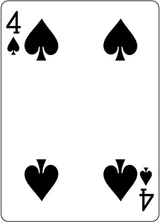
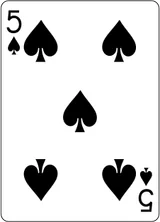
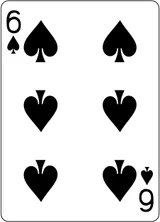
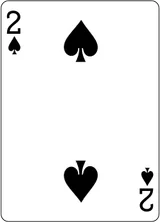
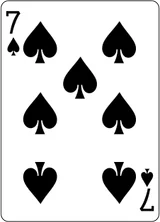
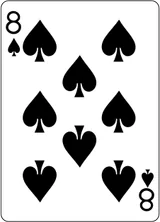
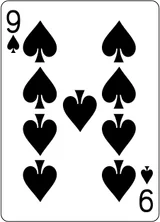
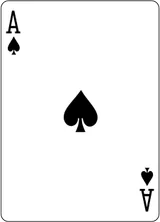
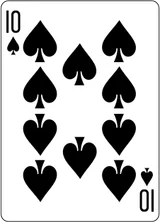
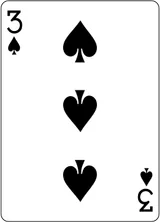
Mentor gives +2 to 3–6, +1 to 2 and 7, 0 to 8, −1 to 9 and Ace, and −2 to 10-value cards. The count is balanced, but it asks for better discipline than Hi-Lo because mistakes on the heavier tags cost more.

Card-value map
Cards 3–6+2
Cards 2 and 7+1
Card 80
9 and Ace−1
10-value cards−2

Use the published divisor for your index set; in many references Mentor is true-counted using remaining double-decks.

Interactive widget
Adjust the count to see its effect

True Count: 4.00

Interactive widget
Illustrative example

Illustrative example

If your running count is +8 with roughly 4 decks remaining, many players would treat that as a cautiously favorable zone—not a reason to blast max bets without checking penetration, rules, and rounds left.

Betting interpretation

When it usually makes sense to raise

  • Mild positive zone: begin with controlled increases, not full aggression.
  • Clear positive zone: expand meaningfully only when the shoe is still deep enough to exploit.
  • Strong positive zone: wider spreads can make sense, but only if your count accuracy is still clean.

When to stay at table minimum

Remain at minimum when the count is neutral or negative, when the table is too crowded, or when the divisor method is slowing your execution.

When to reduce exposure or change tables

Reduce exposure when the shoe stays weak, when the remaining rounds are too few, or when the extra mental load is producing hesitation or missed cards.

Mentor is only better than simpler systems if you execute it well. If it costs speed or confidence, the theoretical gain can disappear quickly.

Best use cases

  • Strong in shoes where you want more information than level‑1 counts provide.
  • Useful for disciplined solo players who already estimate decks well.
  • Less suitable for noisy, high-distraction conditions until the count is fully internalized.
  • In BJCPRO, Mentor is best practiced after Zen or alongside it as a level‑2 comparison.

Pros, limits, and common mistakes

Pros

  • Balanced and information-rich.
  • More nuanced than level‑1 counts without becoming exotic.
  • Good technical progression for disciplined counters.

Limits

  • Smaller learning community than Hi-Lo or Zen.
  • More mental overhead than its popularity might suggest.
  • Can become clumsy if your deck estimation is weak.

Common mistakes and what to learn next

  • Treating Mentor as a cosmetic variant of Hi-Lo.
  • Ignoring its heavier penalty for mistakes on 10-value cards and aces.
  • Using an aggressive spread without enough rounds left to exploit it.
  • Best next system after Mentor: Omega II if you want a widely studied stronger cousin.
Verified resources

References

  • Fred Renzey. Blackjack Bluebook II.
  • Norm Wattenberger, QFIT. Mentor – Card Counting Strategy.
  • Open Library / Archive references for Blackjack Bluebook II publication data.
BJCPRO

Practice this system in BJCPRO

No broken video embeds

Practice Mentor in BJCPRO only after your simpler counts are truly stable. The point is not to “collect systems”; it is to add power without adding avoidable error.

Practice Mentor CountCompare it with Canfield Master