BJCPRO · blog.omegaIIArticle

Omega II: one of the strongest public level‑2 counts for serious shoe players

Balanced, index-rich, and historically tied to Bryce Carlson’s blackjack work rather than the generic myths that often surround it.

Omega II is the point where many players stop “dabbling” in advanced counts and start dealing with real multi-level discipline. It is powerful, but only if you can keep it clean at speed.

Read the guidePractice Omega II

Quick answer and positioning

Omega II is a balanced, level‑2 system. It is for players who already know why Hi-Lo works and now want a stronger public count with deeper technical value.

Who should use it, and who should not

Use this section as the fast decision layer before you dive into the count map and betting interpretation.

  • Difficulty: Intermediate to advanced.
  • Good fit: Players ready for a stronger count without going fully fractional or proprietary.
  • Usually not ideal for: Players who still lose the count in fast shoes.
  • Prerequisites: True-count fluency, deck estimation, and a disciplined betting plan.

History and origin

Omega II is publicly tied to Bryce Carlson’s Blackjack for Blood. Modern references also describe it as closely related to the earlier Canfield Master tag family, which helps explain why serious players often study the two together.

  • Public reference: Bryce Carlson, Blackjack for Blood.
  • Technical lineage: closely related to Canfield Master.
  • Historical reputation: a powerful public level‑2 count in the 1990s and after.
  • Important note: ace side counts can improve betting efficiency in some contexts.

How the count works

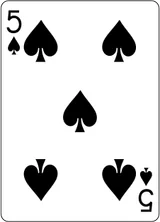
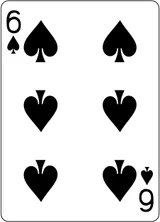
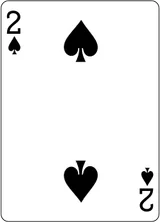
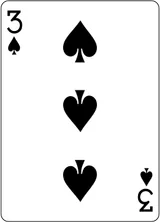
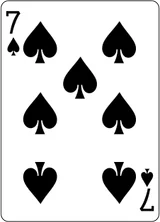
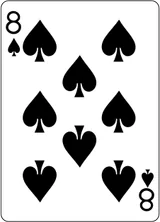
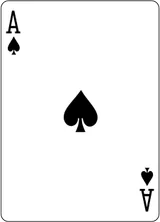
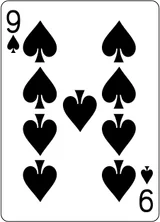
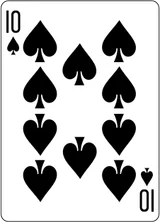
Omega II uses +2 on 4–6, +1 on 2, 3, and 7, 0 on 8 and Ace, −1 on 9, and −2 on 10-value cards. It is balanced, but more demanding than Hi-Lo because the heavier positive weights create more room for error when cards are entering quickly.

Card-value map
Cards 4–6+2
Cards 2–3 and 7+1
8 and Ace0
Card 9−1
10-value cards−2

True Count = Running Count ÷ decks remaining.

Interactive widget
Adjust the count to see its effect

True Count: 5.00

Interactive widget
Illustrative example

Illustrative example

A running count of +12 with 4 decks remaining gives a true count of roughly +3. That is a legitimately attractive zone in a good shoe—but it still does not justify automatic max bets if penetration or table quality is weak.

Betting interpretation

When it usually makes sense to raise

  • TC +1: usually still a modest edge zone.
  • TC +2: first strong expansion point in many practical ramps.
  • TC +3 and above: real spread territory if the game is worth staying in.

When to stay at table minimum

Stay at minimum when the count is neutral or negative, when the shoe is shallow, or when the system’s higher tag load is costing you speed or confidence.

When to reduce exposure or change tables

Reduce exposure when penetration is poor, when the game is not producing enough rounds, or when execution quality drops. With Omega II, discipline matters more than ego.

The count is stronger, but that does not remove variance or weak game conditions. A good level‑2 count cannot rescue a bad table.

Best use cases

  • Excellent public level‑2 choice for serious shoe players.
  • Good for counters comparing Canfield-style tags with more modern study material.
  • Less suitable if your realistic hands-per-hour execution still favors simpler counts.
  • In BJCPRO, Omega II is an ideal progression stop after Mentor or Canfield.

Pros, limits, and common mistakes

Pros

  • Strong public count with serious technical value.
  • Rich index ecosystem in advanced study circles.
  • Balances power and availability better than many proprietary systems.

Limits

  • Heavier mental load than level‑1 counts.
  • Overkill for players who have not maxed out simpler systems first.
  • Can invite overbetting if you confuse “stronger count” with “guaranteed edge.”

Common mistakes and what to learn next

  • Jumping into Omega II before your basic count is effortless.
  • Using a big spread in mediocre games just because the system is stronger on paper.
  • Neglecting accuracy checks under real pace.
  • Best next system after Omega II: Hi-Opt II if you want to go deeper into ace-neutral detail.
Verified resources

References

  • Bryce Carlson. Blackjack for Blood.
  • Norm Wattenberger, QFIT. Omega II – Card Counting Strategy.
  • QFIT and encyclopedia references linking Omega II to Canfield Master lineage.
BJCPRO

Practice this system in BJCPRO

No broken video embeds

In BJCPRO, Omega II is best practiced on the same table settings you use for Hi-Lo. That lets you compare whether the extra tag strength survives your real execution speed.

Practice Omega IICompare it with Hi-Opt II