BJCPRO · blog.hiLoArticle

Hi-Lo: the BJCPRO gold-standard guide to classic card counting

The industry-standard balanced count, rebuilt here as the reference article for learning, comparing, and practicing every other system.

If you only learn one system well, Hi-Lo is still the right place to start. It is balanced, widely indexed, easy to audit, and compatible with almost every serious conversation about blackjack counting.

Read the guidePractice Hi-Lo

Quick answer and positioning

Hi-Lo is a balanced, level‑1 system. It is the best starting point for most players because it teaches the full counting workflow: running count, true count, disciplined bet sizing, and table selection.

Who should use it, and who should not

Use this section as the fast decision layer before you dive into the count map and betting interpretation.

  • Difficulty: Low, but only if you already know basic strategy cold.
  • Best for: Players who want one universal foundation before moving to stronger or more specialized systems.
  • Not ideal for: Players looking for zero division or trying to skip true-count discipline.
  • Prerequisites: Basic strategy, bankroll rules, and the habit of evaluating penetration before spreading bets.

History and origin

The modern Hi-Lo count is generally traced to Harvey Dubner in 1963. Later work by Julian Braun, Edward Thorp, and Stanford Wong helped turn it into the standard reference count used in books, software, and simulation studies for decades.

  • Original creator: Harvey Dubner.
  • Key refinements: Julian Braun, Edward Thorp, and Stanford Wong shaped the versions most players know.
  • Why it matters: Most modern index discussions still assume Hi-Lo as the default comparison point.
  • Practical legacy: It is still the cleanest way to learn balanced counting properly.

How the count works

Hi-Lo assigns +1 to low cards, 0 to neutral cards, and −1 to tens and aces. Because the system is balanced, the running count returns to zero over a full deck, which makes the true count the real betting language: running count divided by decks remaining.

Card-value map
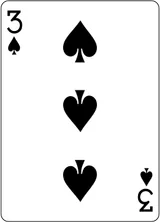
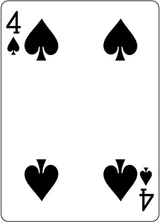
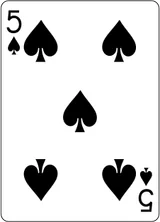
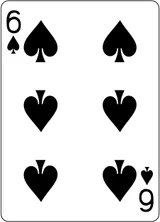
Cards 2–6+1
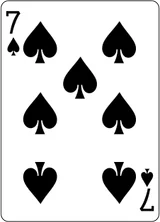
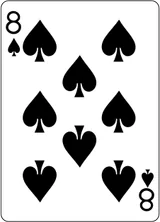
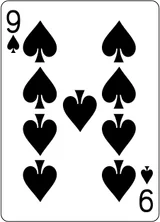
Cards 7–90
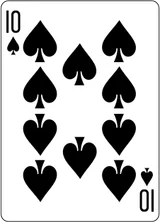
10s and Aces−1

True Count = Running Count ÷ decks remaining.

Interactive widget
Adjust the count to see its effect

True Count: 2.67

Interactive widget
Illustrative example

Illustrative example

Example: if your running count is +8 with roughly 4 decks remaining, the true count is about +2. That is often the first zone where many players begin moving above the table minimum, assuming playable rules and good penetration.

Betting interpretation

When it usually makes sense to raise

  • TC +1: often still too thin for an aggressive spread unless the game is excellent and variance is well funded.
  • TC +2: a common practical point for the first real increase above minimum.
  • TC +3 to +4: usually where the stronger part of the spread begins, if penetration, rules, and bankroll all support it.

When to stay at table minimum

Stay at minimum when the true count is neutral or negative, when penetration is poor, when you are nearing the shuffle with too few rounds left to justify aggression, or when the table pace is causing counting errors.

When to reduce exposure or change tables

Do not “attack the table” just because you know the system. Reduce exposure, wong out, or change tables when the count stays negative with substantial shoe left, when deck penetration is weak, when rules are unattractive, or when your mental accuracy starts slipping.

The thresholds above are illustrative. They shift with number of decks, rules, penetration, bankroll, risk tolerance, and your actual index strategy. Positive EV comes from the combination of count quality and game quality, not from one number alone.

Best use cases

  • Excellent default system for six- and eight-deck shoes.
  • Strong first system for players who want to understand true count before learning ace-neutral or multi-level counts.
  • Works well in faster environments because the tags are simple and easy to audit mentally.
  • In BJCPRO, Hi-Lo should be the canonical first stop before you compare KO, Hi-Opt, Zen, or Wong Halves.

Pros, limits, and common mistakes

Pros

  • Easy tags, strong practical betting value, and the deepest ecosystem of published indexes.
  • Teaches the full balanced-count workflow cleanly.
  • Simple enough to keep speed without giving up credibility or analytical depth.

Limits

  • Still requires true-count conversion under pressure.
  • Players often overestimate their edge at small positive counts.
  • It is simpler than several advanced counts, but that does not make it trivial in live conditions.

Common mistakes and what to learn next

  • Confusing a positive running count with a playable true count.
  • Opening the spread too early in shallow shoes.
  • Trying to learn deviations before the core count is stable.
  • Best next system after Hi-Lo: Hi-Opt I if you want ace-neutral structure, or KO if you want a lighter operational workflow.
Verified resources

References

  • Norm Wattenberger, QFIT. Hi-Lo – Card Counting Strategy.
  • Edward O. Thorp. Beat the Dealer.
  • Stanford Wong. Professional Blackjack.
  • Peter Griffin. The Theory of Blackjack.
BJCPRO

Practice this system in BJCPRO

No broken video embeds

Hi-Lo is the best system to practice directly in BJCPRO because it teaches every reusable habit: maintaining the running count, converting to true count, and sizing bets without forcing a multi-level mental load.

Practice Hi-LoCompare it with Silver Fox