BJCPRO · blog.ustonSsArticle

Uston SS: an aggressive unbalanced count that rewards clean running-count discipline

Level‑3, unbalanced, and highly betting-oriented—powerful on paper, but only for players who can manage the swings and the workload.

Uston SS is not subtle. It is one of the more aggressive public-facing families in blackjack counting: high betting correlation, unbalanced structure, and enough operational intensity to punish sloppy execution quickly.

Read the guidePractice Uston SS

Quick answer and positioning

Uston SS is an unbalanced, level‑3 system. It is for advanced players who want strong betting sensitivity and who are comfortable reading the shoe from running-count zones rather than from a classic balanced workflow.

Who should use it, and who should not

Use this section as the fast decision layer before you dive into the count map and betting interpretation.

  • Difficulty: Advanced.
  • Good fit: Players intentionally exploring aggressive unbalanced counts.
  • Usually not ideal for: Anyone still developing stable table discipline or bankroll control.
  • Prerequisites: Strong running-count discipline, game selection, and emotional control.

History and origin

Modern references describe Uston SS as a proprietary strategy developed by Ken Uston, Arnold Snyder, and Sam Case, published in The Uston SS Count. The “SS” is commonly explained as “Strongest and Simplest,” which captures the design goal even if the real workload is anything but beginner-friendly.

  • Associated names: Ken Uston, Arnold Snyder, Sam Case.
  • Reference publication: The Uston SS Count (1986).
  • Historical niche: a betting-heavy advanced unbalanced strategy.
  • Key trait: very high betting correlation.

How the count works

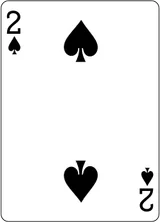
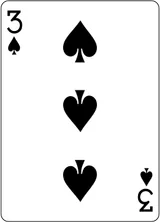
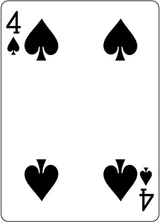
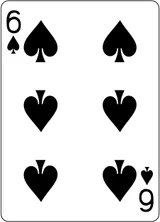
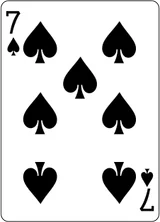
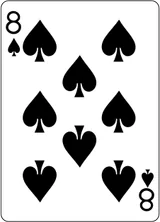
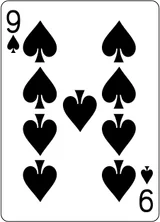
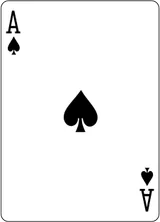
Uston SS uses +3 on 5, +2 on 2–4 and 6, +1 on 7, 0 on 8, −1 on 9, and −2 on 10-value cards and aces. As an unbalanced system, it relies on running-count interpretation rather than the same classic true-count language used by balanced systems.

Card-value map
Card 5+3
Cards 2–4 and 6+2
Card 7+1
Card 80
Card 9−1
10s and Aces−2

Primary language: Running Count. Use published betting zones for the exact version you play.

Interactive widget
Adjust the count to see its effect

Running Count: 12

Interactive widget
Illustrative example

Illustrative example

A running count that climbs into the stronger published Uston SS zones can justify serious spread expansion—but only if the game is still deep enough and your bankroll plan is built for the swings.

Betting interpretation

When it usually makes sense to raise

  • Use running-count checkpoints, not guesswork.
  • Expand only when your published count zone and the remaining rounds both justify it.
  • Do not overreact to short bursts upward early in bad or shallow shoes.

When to stay at table minimum

Stay at minimum when the running count is weak, when the table quality is poor, or when your bankroll plan does not support the variance profile of an aggressive unbalanced system.

When to reduce exposure or change tables

Reduce exposure when the count weakens, the game crowds up, or your confidence in the running-count zone is no longer high enough to support the spread you want.

Uston SS can look exciting because of its betting power, but it is not forgiving. Poor bankroll discipline or over-aggression can erase its advantage fast.

Best use cases

  • Best for advanced players intentionally studying aggressive unbalanced counts.
  • Works as a contrast point to KO: both are unbalanced, but Uston SS is far heavier and more volatile.
  • Poor fit for casual learning or thin bankrolls.
  • In BJCPRO, compare it against KO before deciding whether more aggression is actually helping you.

Pros, limits, and common mistakes

Pros

  • Very strong betting orientation.
  • Unbalanced structure can feel intuitive to players who dislike repeated division.
  • Historically important in the Uston/Snyder lineage.

Limits

  • Heavy workload for an unbalanced system.
  • Variance management matters even more here.
  • Easy to misuse if you love the aggression more than the discipline.

Common mistakes and what to learn next

  • Treating Uston SS as “just KO but stronger.”
  • Using oversized spreads without bankroll preparation.
  • Ignoring how quickly crowded shoes reduce practical value.
  • Best next system after Uston SS: Uston APC if you want more balanced precision.
Verified resources

References

  • Norm Wattenberger, QFIT. Uston SS – Card Counting Strategy.
  • Blackjack Review Encyclopedia. U is for Uston.
  • Ken Uston / related Uston material on advanced counting systems.
BJCPRO

Practice this system in BJCPRO

No broken video embeds

Use BJCPRO to compare Uston SS against KO on the same game conditions. The difference in aggression and workload becomes obvious very quickly.

Practice Uston SSCompare it with Uston APC